Archives
- 2026-06
- 2026-05
- 2026-04
- 2026-03
- 2026-02
- 2026-01
- 2025-12
- 2025-11
- 2025-10
- 2025-09
- 2025-03
- 2025-02
- 2025-01
- 2024-12
- 2024-11
- 2024-10
- 2024-09
- 2024-08
- 2024-07
- 2024-06
- 2024-05
- 2024-04
- 2024-03
- 2024-02
- 2024-01
- 2023-12
- 2023-11
- 2023-10
- 2023-09
- 2023-08
- 2023-07
- 2023-06
- 2023-05
- 2023-04
- 2023-03
- 2023-02
- 2023-01
- 2022-12
- 2022-11
- 2022-10
- 2022-09
- 2022-08
- 2022-07
- 2022-06
- 2022-05
- 2022-04
- 2022-03
- 2022-02
- 2022-01
- 2021-12
- 2021-11
- 2021-10
- 2021-09
- 2021-08
- 2021-07
- 2021-06
- 2021-05
- 2021-04
- 2021-03
- 2021-02
- 2021-01
- 2020-12
- 2020-11
- 2020-10
- 2020-09
- 2020-08
- 2020-07
- 2020-06
- 2020-05
- 2020-04
- 2020-03
- 2020-02
- 2020-01
- 2019-12
- 2019-11
- 2019-10
- 2019-09
- 2019-08
- 2019-07
- 2019-06
- 2019-05
- 2019-04
- 2018-11
- 2018-10
- 2018-07
-
Special Health Care Needs Finally we investigated if calpain
2022-03-04
Finally, we investigated if calpain truncation affects GlyT1 turnover and trafficking. To simulate calpain cleavage at the T602/T603 and G626/S627 sites we constructed GlyT1 transporters missing the last 12 and 36 amino acids. Since the 36 amino Special Health Care Needs truncation also removes all
-
br Conclusion br Introduction The
2022-03-04
Conclusion Introduction The intracellularly generated metabolite methylglyoxal (MG, 2-oxopropanal) acts as a potent electrophile causing irreparable cellular damage if allowed to build to cytotoxic concentrations [1], [2], [3], [4], [5], [6]. The glyoxalase (Glx) system is an enzyme couple cri
-
Much less is known about the and subunits GlyR
2022-03-04
Much less is known about the α3 and α4 subunits. GlyR α3 subunit immunoreactive synapses are concentrated in discrete bands across the IPL; besides, bipolar, amacrine and ganglion cells have been suggested to express it (Haverkamp et al., 2003, Wässle et al., 2009). In fact, All amacrine express α3β
-
To examine the possible role of mGluRs in
2022-03-04
To examine the possible role of mGluRs in the LH/PFA in the hypercapnic ventilatory response, a nonspecific antagonist of mGluRs, MCPG, was microinjected into the LH/PFA. MCPG elicited a significantly increased hypercapnic ventilatory response in awake rats, but not during sleep, in the light and da
-
The ER EK polymorphism is located
2022-03-04
The ER22/23EK polymorphism is located in the transactivation domain of the GR gene. A single nucleotide polymorphisms (SNPs) has been identified in both of the two adjacent codons (22 and 23). These SNPs are fully linked and are associated with relative GC resistance[32], [44]. Although no associati
-
The novel Ghsr IRES Cre knock in
2022-03-04
The novel Ghsr-IRES-Cre knock-in mouse line allowed us to deconstruct the involvement of MBH GHSR-expressing neurons in mediating food intake responses using chemogenetic modulation of their neuronal activity. In our studies, hM4Di DREADD virus injections to inhibit GHSR neurons targeted several nuc
-
br Voltage dependent anion channel VDAC is a
2022-03-04
Voltage-dependent anion channel VDAC is a ubiquitous protein showing well conserved structural and functional properties in spite of major variations in its sequence (for review see [50]). Most of what we know about VDAC electrophysiological properties (for reviews, see [51], [52]) was initially
-
The secretase complex comprises four core subunits presenili
2022-03-04
The γ-secretase complex comprises four core subunits: presenilin (PS), nicastrin (NCT), anterior pharynx-defective 1 (Aph1), and presenilin enhancer 2 (Pen2) [7], [8]. PS is the catalytic subunit of γ-secretase, and many PS mutations associated with familial AD result in a high Aβ42/Aβ40 ratio [5].
-
uPAR another newly discovered ligand has implicated
2022-03-04
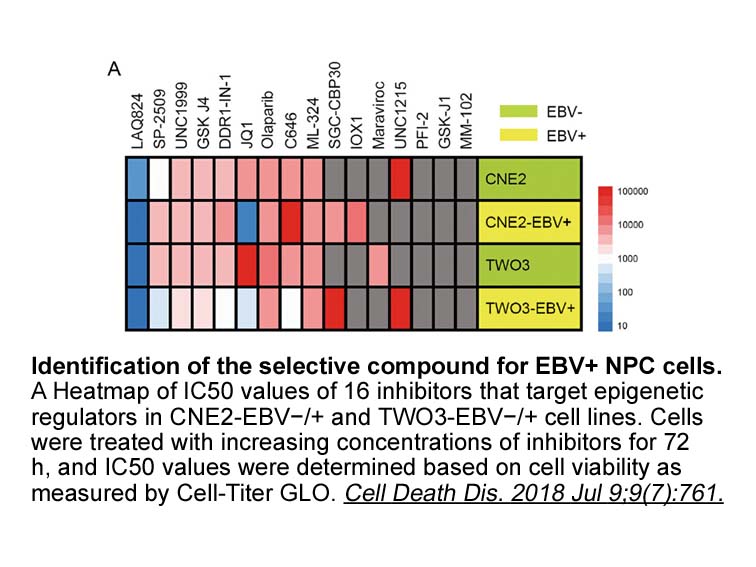
uPAR, another newly discovered ligand, has implicated FPRL1 as a potential link between the fibrinolytic cascade and inflammation. uPA is a serine protease best known for its ability to regulate fibrinolysis and for its importance in tissue remodeling and tumor invasion [49]. However, uPA also induc
-
AZD2014 In addition we assessed the viability of tetrahydroq
2022-03-04
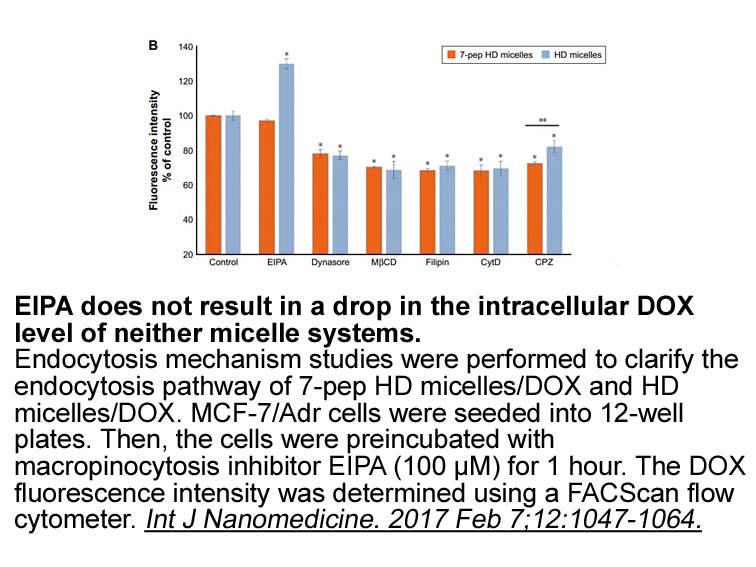
In addition, we assessed the viability of 1,2,3,4-tetrahydroquinoline (13t) and 1,2,3,4-tetrahydroisoquinoline (13u) as the tail on account of our previous SAR results. To our delight, 13t and 13u each had comparable activity to that of 13c, with 13u being slightly more potent than 13c. Further stru
-
br Introduction For decades regulated
2022-03-04
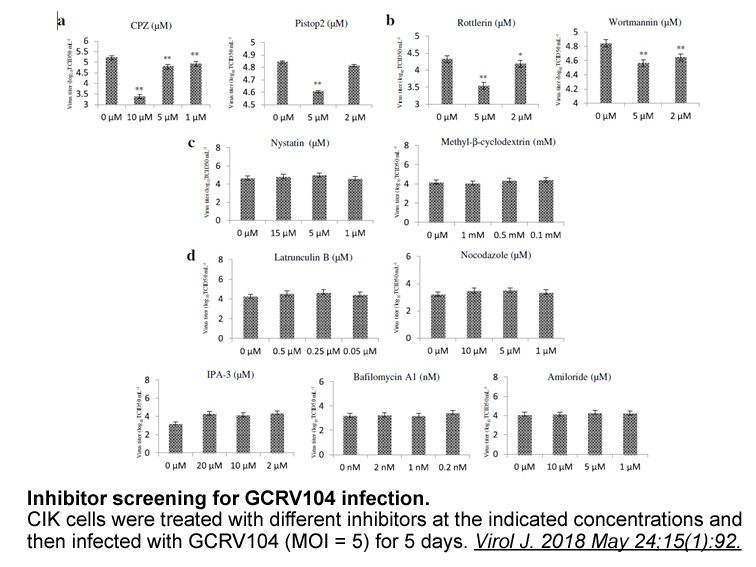
Introduction For decades, regulated apoptosis and unregulated, accidental necrosis have been considered as the two sole cell death routes in multicellular organisms. With the beginning of the 21st century a paradigm shift has been witnessed by researchers in the field with the recognition that ma
-
br Acknowledgments We apologize to the researchers who
2022-03-04
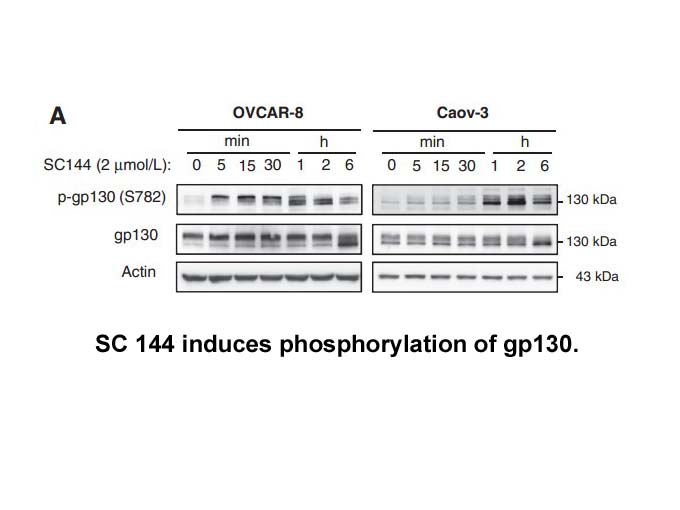
Acknowledgments We apologize to the researchers who were not referenced due to space limitations. We thank Christine Heiner (Department of Surgery, University of Pittsburgh) for her critical reading of the manuscript. This work was supported by grants from the US National Institutes of Health (R0
-
Glucose induced nuclear translocation of several
2022-03-04
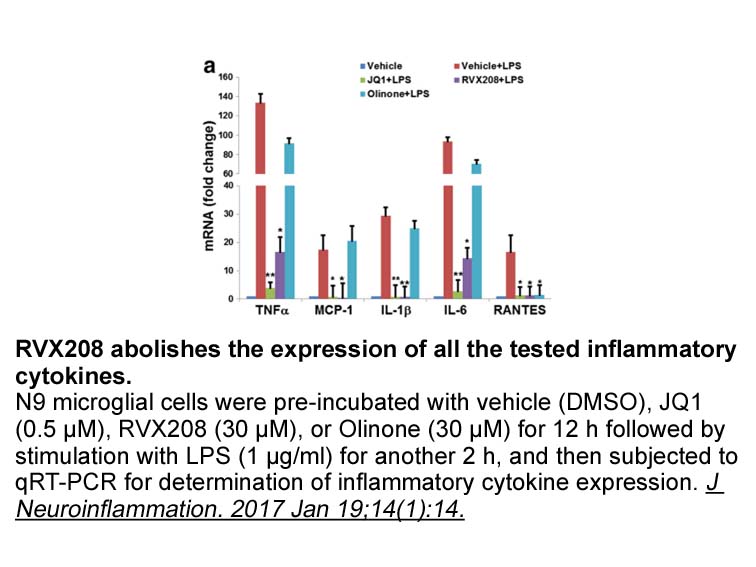
Glucose-induced nuclear translocation of several enzymes, including GK, glyceraldehyde-3-phosphate dehydrogenase (GAPDH), muscle GS, aldolase, lactate dehydrogenase (LDH) and phosphoglycerate kinase (PGK) is a well-known phenomenon. Additional functions have been proposed for these enzymes in the nu
-
Cilengitide synthesis Accordingly and in animal models a hig
2022-03-04
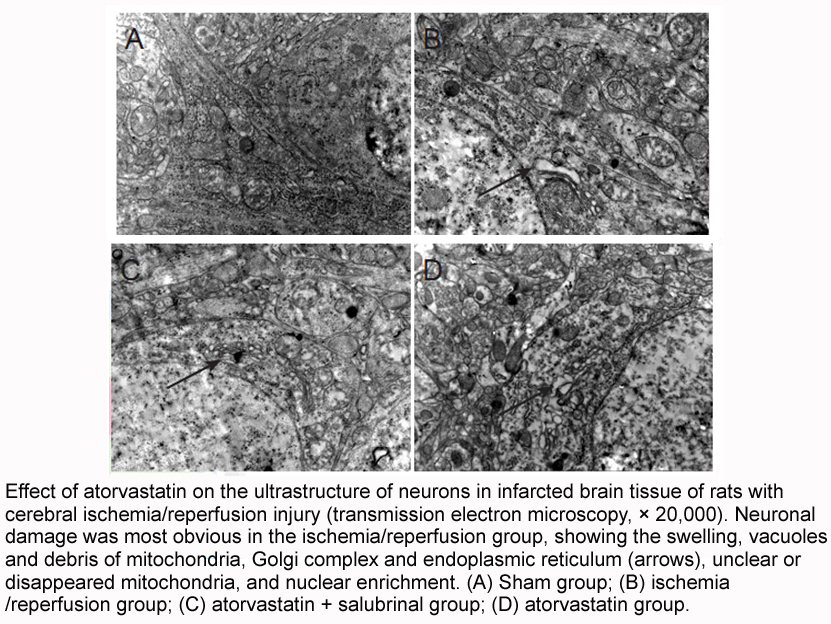
Accordingly and in animal models, a high-fat diet rich in CO (CO-HFD) impeded ventricular function and induced cardiac cell death and remodeling, at least, by down-regulating cell antioxidant defense systems and induction of oxidative stress [28], [29], [30], [31]. Interestingly, long chain fatty ac
-
There has been conflicting evidence on the possible
2022-03-04
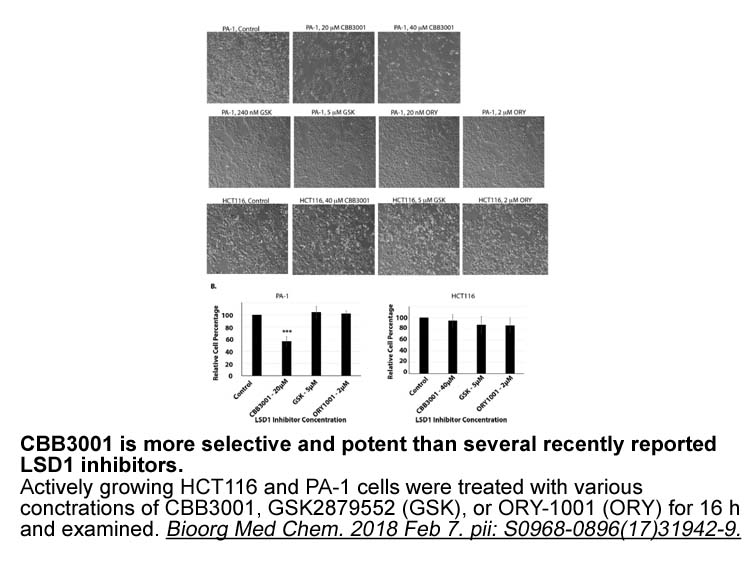
There has been conflicting evidence on the possible receptor mechanisms that mediate the neuro-immuno-modulatory effects of FAAH substrates. Evidence from in vitro studies indicates that AEA-mediated modulation of TLR4-induced neuroinflammation may be mediated by CB1/CB2 receptor dependent (Correa e
16520 records 507/1102 page Previous Next First page 上5页 506507508509510 下5页 Last page